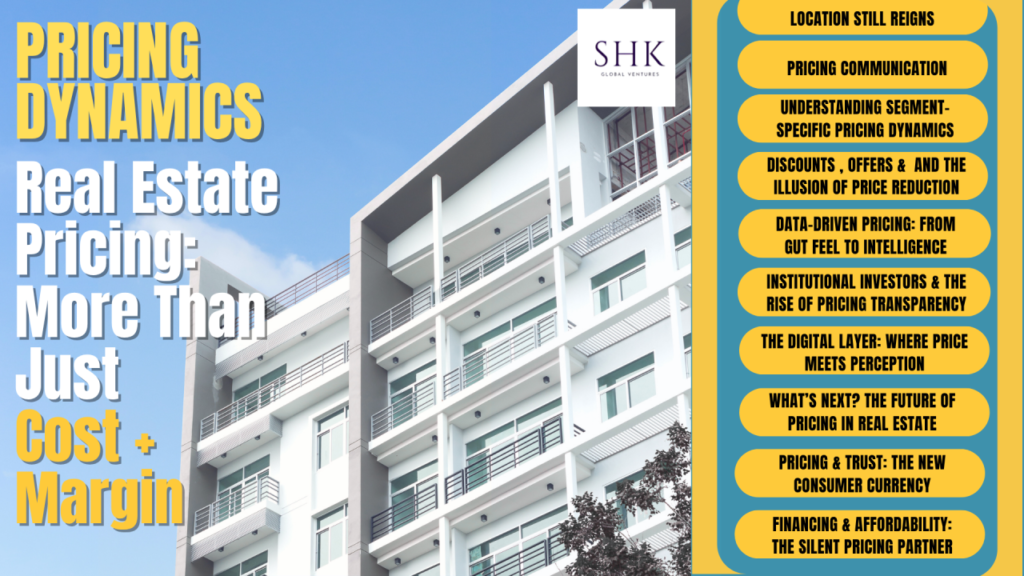
In real estate, price is more than a numerical tag — it is a signal of value, intent, and trust. While traditional formulas emphasize basic cost components, the modern landscape requires deeper insight into how pricing is determined and communicated. LinkedIn
1. Beyond Cost: The Fundamentals of Pricing
Traditional pricing in real estate typically starts with:
- Land cost
- Construction and approvals
- Marketing and margin
However, modern pricing strategies incorporate multiple market-driven variables such as demand levels, brand positioning, competitive benchmarking, and policy influences like taxation changes. LinkedIn
2. Location Reimagined
The classic “location, location, location” principle still holds, but with added complexity. Developers now evaluate:
- Micro-market performance
- Social infrastructure (schools, hospitals, malls)
- Connectivity through transit systems
- Future planned infrastructure
Anticipation of future development has become embedded in pricing strategies, often leading price appreciation before physical changes occur. LinkedIn
3. Segment-Specific Pricing Drivers
Real estate pricing varies by asset class:
- Residential: Affordable housing pricing is highly sensitive to incentives and EMI structures, while luxury segments value exclusivity and brand strength. LinkedIn
- Commercial: Lease yield expectations and tenant profile influence pricing, with ESG compliance and maintenance standards adding premium value. LinkedIn
- Retail: High-footfall zones command pricing based on visibility, frontage, and co-tenancy benefits. LinkedIn
- Industrial/Warehousing: Pricing is driven by location connectivity, operational costs, and yield forecasts. LinkedIn
4. Data Intelligence: Moving from Gut to Machine-Assisted Pricing
The biggest shift in pricing strategy is the adoption of data intelligence:
- AI and platform insights benchmark local market sales
- CRM data reveals buyer preferences and conversion patterns
- Micro-pricing techniques adjust prices within the same project (e.g., based on unit views or floor level)
Dynamic pricing models now adjust rates in real time based on inventory pressure and absorption trends. LinkedIn
5. Financing and Buyer Affordability
Real estate prices are heavily influenced by how buyers access finance. Important factors include:
- EMI-to-income ratios
- Interest rate changes
- Collaboration between developers and financial institutions
These financial factors affect pricing communication and perception, even when the base price remains unchanged. LinkedIn
6. Discounting and Perceived Offers
Actual prices rarely fall, but perceived price reductions are achieved through incentives like:
- Free parking or no floor rise charges
- Stamp duty waivers
- Furnishing vouchers
- Buy-back assurances
These tactics create value in the buyer’s mind without reducing headline prices. LinkedIn
7. Institutional Investors and Transparency
The entry of institutional investors such as REITs, SM REITs, family offices, and global funds has increased pricing transparency. Institutional players demand:
- Clear valuation frameworks
- Audited sales data
- Yield-based price metrics
This shift pushes developers toward more structured and credible pricing practices — beneficial for both investors and buyers. LinkedIn
8. Pricing as a Trust Signal
In a post-RERA world, pricing is no longer just transactional. Buyers assess pricing for transparency and reliability:
- Is the price consistent across channels?
- Are pre-launch commitments honored?
- Are escalation clauses disclosed?
Smart pricing strategies build long-term credibility, not just short-term sales. LinkedIn
9. The Digital Influence on Pricing Perception
Online platforms and digital communities now shape how pricing is researched and perceived:
- Buyers compare prices in real time
- Social platforms influence sentiment
- Listings and walkthroughs impact perceived value
If online pricing does not align with reputation, developers risk losing buyers before physical engagement occurs. LinkedIn
10. Future Pricing Trends
Real estate pricing is evolving from traditional guesstimates toward tech-enabled, trust-led, and investor-aligned frameworks. Emerging trends include:
- Tokenization for fractional ownership
- Dynamic pricing platforms informed by real-time demand
- PropTech valuation tools with advanced analytics
- Community-based pricing influenced by resident sentiment
Above all, pricing is becoming a strategic branding tool, not just a sales lever.
Conclusion
Real estate pricing today transcends basic cost calculations. It reflects data intelligence, buyer psychology, competitive signals, and trust. Forward-looking pricing strategies lead to better market positioning, transparency, and long-term credibility — essential components in a rapidly evolving real estate landscape.